Residential Garage Door Openers: Comprehending Entrapment Defense Requirements
A domestic garage door opener is easy to consider given. You push a switch, the door relocations, and the auto is available in or out. That routine really feels harmless till something goes wrong. A garage door is large, hefty, and powered by an electric motor that does not assume for itself. When the door shuts on an object, an animal, or an individual, the risk is prompt. That is specifically why entrapment protection matters, and why home owners ought to comprehend what the demand in fact means.
The lawful and security landscape around automatic garage door openers altered in a meaningful way decades earlier, yet numerous house owners still do not know the cutoff date or the useful implications. According to the United State Customer Item Security Compensation, automatic domestic garage door openers made on or after January 1, 1991, are needed to consist of entrapment defense under UL 325 relevant regulations. That is the headline, however the much deeper lesson is more important: the opener itself is just one component of a risk-free system. The problem of the door, the hardware, and the high quality of setup all matter.
If you are shopping for Residential Garage Door Openers, replacing an older driver, or searching for domestic garage door repair service near me due to the fact that something feels off, this is the point where a little understanding can protect against a major mistake.
The demand is not a technicality
Entrapment security is not an advertising function spruced up as safety language. It exists due to the fact that garage doors can hurt individuals when they do not stop or reverse as intended. The need for openers made on or after January 1, 1991 mirrors a straightforward safety concept: an automatic closing system need to account for the possibility that something may remain in the door's path.
Homeowners in some cases focus on horsepower, remotes, phone controls, illumination, or various other Residential Garage Door Accessories before they think of the safety and security system. That order should be reversed. A quiet opener is nice. Smart controls are practical. None of that issues if the door system is unsafe.
This is particularly relevant in older homes, where an opener might have been set up long earlier, after that left in service time after time with only occasional attention. I have actually seen house owners presume that if the motor still runs, the system should be fine. That presumption is risky. Age alone does not confirm an issue, but it ought to motivate a closer look. If the opener precedes the 1991 requirement, that is a strong reason to ask whether it belongs in service at all.
Why the door itself matters as much as the opener
One of the most overlooked truths in garage door safety comes directly from the CPSC: an appropriately operating domestic garage door need to be balanced. That appears basic, however it is a major factor. A door that binds, sticks, or is out of balance is not simply frustrating. It can threaten the secure procedure of the opener and place added stress on the whole system.
Many individuals experience the symptoms before they acknowledge the threat. The door waits halfway down. It jerks when opening up. It seems much heavier on one side. It massages, stalls, or really feels unforeseeable during movement. Those are not aesthetic issues. The CPSC encourages that a door that binds, sticks, or is unbalanced ought to be serviced by a professional.
That advice is worthy of to be taken literally. A garage door opener is not designed to make up for a failing door system for life. When a door runs out equilibrium, the opener may be doing much more work than it should. Home owners typically translate that as "the electric motor is weak" and start purchasing a more powerful driver. Often the actual trouble is not the opener at all. Changing the electric motor without dealing with the door problem can leave the underlying hazard untouched.
The CPSC also recommends having a competent solution individual fixing cords, spring settings up, and other hardware prior to installing an opener. That factor is critical since homeowners typically think about the opener as the centerpiece. In reality, the opener is just as safe as the door and training system it is affixed to. Springs, wires, and equipment are not attractive components. They bring force, tension, and weight. If they require fixing, that function must take place before a new driver goes in.
The practical definition of "entrapment defense"
For property owners, the practical inquiry is not just how to analyze a criterion in the abstract. It is how to see to it the opener on the ceiling and the door in the opening create a secure set. Entrapment protection is about minimizing the opportunity that a closing automatic door will trap someone or something under it. The rule exists because the risk is actual, not hypothetical.
That is why replacing an older opener can be more than a comfort upgrade. It can be a security improvement. If you are comparing Higgins Overhead Door Residential Garage Door Openers with various other Residential Garage Door Openers, the conversation should start with conformity and system condition, not brand name preference alone. A home owner can reasonably care about sound degree, controls, and everyday comfort, however the first inquiry needs to be whether the opener belongs in a contemporary risk-free setup.
The exact same goes with property owners preparing a wider door task. If you are changing Residential Garage Doors, including Residential Garage Door Add-on, or evaluating various residential garage doors near me, the opener needs to become part of a bigger system evaluation. A door that looks good from the aesthetic can still be dangerous if the technicians are ignored. An opener with contemporary attributes can still be a bad choice if it is being connected to harmed or out of balance hardware.
Where people enter into trouble
The most typical garage door mistakes are not significant. They are regular choices made as well quickly.
A property owner notices the opener struggling and thinks it only needs a quick change. A person listens to scraping and keeps utilizing the door for an additional month because it still opens "all right." A family members gets a substitute opener online and prepares to install it over a weekend without initial asking whether the door is well balanced. An additional property owner look for property garage door fixing near me throughout an immediate failure, calls the initial low cost ad, and authorizes job without checking who actually revealed up.
Each of those moments can go badly for a different reason. The security issue is not simply the tools. It is the combination of equipment, condition, and choice making under pressure.
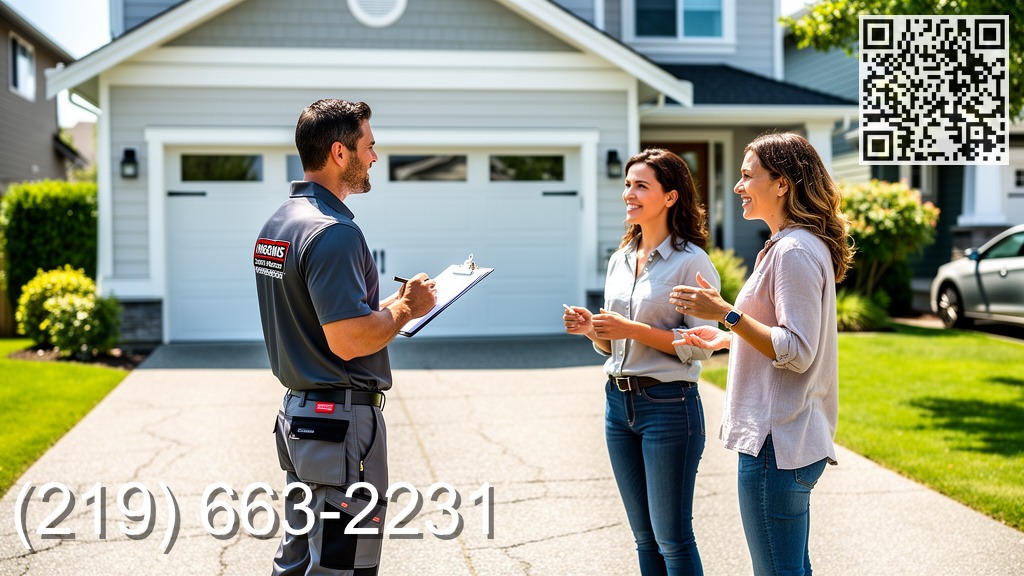
I have discovered that home owners are often most vulnerable when the door is stuck open, the auto is entraped, or your home feels unprotected. Because minute, cost and speed dominate the conversation. That is exactly when scammers and reckless drivers can thrive. The Bbb cautions that garage door scammers might lack a reputable physical showroom or utilize a fake address. Legit companies commonly have identifiable branding, a physical location, and proven get in touch with information.
That matters due to the fact that garage door work usually includes parts and conditions that a home owner can not quickly court at a look. If someone claims the spring system is risky, many consumers remain in no position to suggest. That is why verification is so important prior to work starts.
Choosing assistance thoroughly is part of safety
Entrapment defense needs point to the requirement for correct equipment, but secure outcomes likewise depend on that inspects, repair services, and mounts that tools. The BBB suggests requesting for proof of insurance coverage, licensing, qualifications, and recognition, while additionally noting that licensing needs differ by location and must be checked with regional authorities. The FTC in a similar way recommends confirming a professional's license with state or county government, requesting for proof of insurance, and obtaining a created agreement prior to work begins.
Those referrals are not documents for paperwork's purpose. They safeguard home owners from the two problems that appear most often in immediate solution telephone calls: unqualified work and vague pricing.
It deserves slowing down enough time to ask straight inquiries. Will there be a diagnostic charge if you choose not to proceed? The FTC's guidance on repair work notes that analysis work is commonly charged separately and recommends consumers to inquire about that before authorizing service. That single inquiry can prevent a dispute later.
It additionally helps to demand written information. The BBB claims to get whatever in writing, including the scope of work, materials, and costs. The FTC states a written estimate needs to explain the job, products, conclusion day, and cost. For garage door opener replacement or repair work, that clearness issues since property owners are typically accepting a mix of labor, hardware evaluation, and opener associated job all at once.
A convincing sales pitch is not the exact same thing as a risk-free recommendation. If a firm can not discuss what is wrong with the door, what will certainly be repaired first, and why the opener is or is not appropriate for the existing system, that is a problem.
A short truth check before you authorize any type of opener work
Use this quick screen prior to accrediting repair service or installment:
- Ask whether the door is well balanced, or whether it binds or sticks.
- Confirm whether wires, springs, or various other equipment demand fixing prior to opener work.
- Request a created price quote defining work, products, timing, and price.
- Verify licensing and insurance policy where called for in your area.
- Ask whether there is a diagnostic fee if you decrease the repair.
That five action time out can conserve cash, but much more importantly, it can stop a harmful shortcut.
The warning signs of a bad service call
When home owners really feel rushed, the top quality of judgment declines. The BBB cautions against high stress techniques, demands for complete repayment upfront, and low solution telephone call supplies that later balloon right into a lot greater fees. It also keeps in mind that legitimate technicians commonly wear attires, lug identification, and drive firm branded vehicles.
Those information may appear little until you have an unfamiliar person in your driveway insisting that the system is risky and need to be fixed instantly. That is a minute when noticeable expertise matters. Branding and identification do not guarantee quality, however their lack needs to make you cautious.
The BBB also recommends obtaining multiple quotes and watching out for extremely reduced quotes. That suggestions is specifically useful when the door still operates, even if badly, and you have adequate time to compare alternatives. The most inexpensive number at the front end can become one of the most expensive choice as soon as new costs begin appearing.
Here are common red flags that deserve a difficult stop:
- The business has no proven place or uses an address that does not inspect out.
- The specialist refuses to reveal identification or proof of insurance.
- You are pushed to authorize major job prior to getting a composed estimate.
- The offer appears uncommonly low-cost, after that expands when the specialist arrives.
- You are asked for full payment upfront.
If any one of those show up, stop briefly the work. A garage door trouble is discouraging, yet a negative repair choice can leave you with a hazardous door and a larger bill.
Why older openers are entitled to added scrutiny
The 1991 day issues due to the fact that it offers homeowners a useful benchmark. If you know your automatic opener was manufactured on or after January 1, 1991, entrapment protection is part of the safety expectation. If the opener is older than that, the discussion changes. At that point, this is not regarding squeezing a couple of more years out of an aging maker merely since it still runs. It is about identifying that safety needs progressed for a reason.
Homeowners occasionally are reluctant since the existing opener "has actually constantly worked." That expression can be misleading. Lots of outdated systems work right up until the day they do not. Security tools commonly earns its value in the unusual moment when something unforeseen happens. That is why age and compliance ought to be seen with the lens of risk, not just convenience.
This does not imply every property owner requires a full garage overhaul. It indicates you ought to not allow an operating motor blind you to a bigger security concern. If the opener is old, the door is out of balance, or the hardware is overdue for fixing, the best move is to have a certified expert evaluate the system prior to more usage or before a substitute opener is installed.
A more secure upgrade mindset
When people look for Residential Garage Doors or operators, they commonly think of a product acquisition. In practice, a risk-free result is more detailed to a system upgrade. The opener, door balance, springs, cable televisions, and sustaining equipment all need to function together.
That way of thinking additionally helps house owners ask much better inquiries. As opposed to claiming, "What is the cheapest opener you can set up today?" ask, "Is the door in proper condition for a new opener?" Instead of focusing only on the wall surface switch or remote, ask whether any binding, sticking, or inequality needs to be remedied first. Rather than contrasting just rate, contrast how clearly each firm discusses the range of work and the state of the existing system.
This is where brand terms can match a larger conversation without taking control of it. Whether you are considering Higgins Overhead Door Residential Garage Doors, Higgins Overhead Door Residential Garage Door Openers, or Higgins Overhead Door Residential Garage Door Add-on, the exact same concept puts on any type of service provider or product: security precedes, and the opener must never be treated as a plug in repair for a jeopardized door system.
What property owners should remember most
If there is one idea worth holding onto, it is this: entrapment defense needs are only component of the security image, but they are a very fundamental part. Automatic household garage door openers made on or after January 1, 1991 are required to include entrapment defense under UL 325 related policies. That fact provides property owners a clear factor to take note of the age and condition of the operator in their garage.
Just as important, the CPSC makes it clear that an https://jaredtlhe023.rivetgarden.com/posts/residential-garage-door-openers-what-homeowners-required-to-know-about-safe-procedure appropriately running household garage door need to be well balanced, and that a door that binds, sticks, or is unbalanced need to be serviced by a specialist. It additionally says cords, springtime assemblies, and various other hardware must be fixed by a professional solution individual before mounting an opener. Those are not side notes. They are main to secure operation.
If your door is breaking down, stand up to the urge to treat the opener as the only problem. If you are changing equipment, demand a composed price quote and validate who is doing the work. If you are comparing residential garage doors near me or trying to find domestic garage door fixing near me, do not let urgency push you right into obscure prices or unproven service.
A garage door opener ought to make life less complicated. It needs to not introduce uncertainty every time the door shuts. When home owners comprehend entrapment defense demands and set that expertise with careful hiring and system level reasoning, they put themselves in a much more powerful position. That is exactly how comfort stays convenient, and just how an usual house device stays on the ideal side of safety.
Visit Our Showroom
1305 Erie Ct
Crown Point, IN 46307